
Saffron Supplements UK 2026: The Mood Spice With Genuine Trial Evidence Behind the Hype
Walk down the supplement aisle at Holland & Barrett this spring and you’ll spot something that wasn’t there a few years ago: small bottles of saffron capsules, sitting between the magnesium and the ashwagandha, marketed for mood. Saffron supplements in the UK have moved quietly from the spice rack to the wellness shelf, and unlike a lot of what gets stocked beside them, there is now a real body of clinical trial evidence behind the claims.
In This Article
- What saffron actually is and how it ended up on Boots shelves
- The trial evidence: what saffron extract has actually been tested for
- Saffron for PMS and perimenopausal symptoms
- The sleep evidence almost nobody mentions
- Saffron supplements on UK shelves: what to look for in 2026
- Is it worth £20-£30 a month?
- Side effects, safety and who shouldn’t take it
- How to fit saffron into a broader routine
- The honest read on saffron in 2026
This isn’t a story about a TikTok ingredient with thin science. Saffron extract has been put through controlled trials for low mood, premenstrual symptoms, sleep and even cognition, and a 2025 trial of 202 adults published in the Journal of Nutrition is the largest single test of its antidepressant effects to date. Whether that justifies the £20-£30 a month most UK brands now charge is a more interesting question – and one the spice’s marketing rarely addresses honestly. If you want the cautionary opposite, a supplement whose marketing ran well ahead of its evidence, see our look at berberine, marketed as nature’s Ozempic.
What saffron actually is and how it ended up on Boots shelves
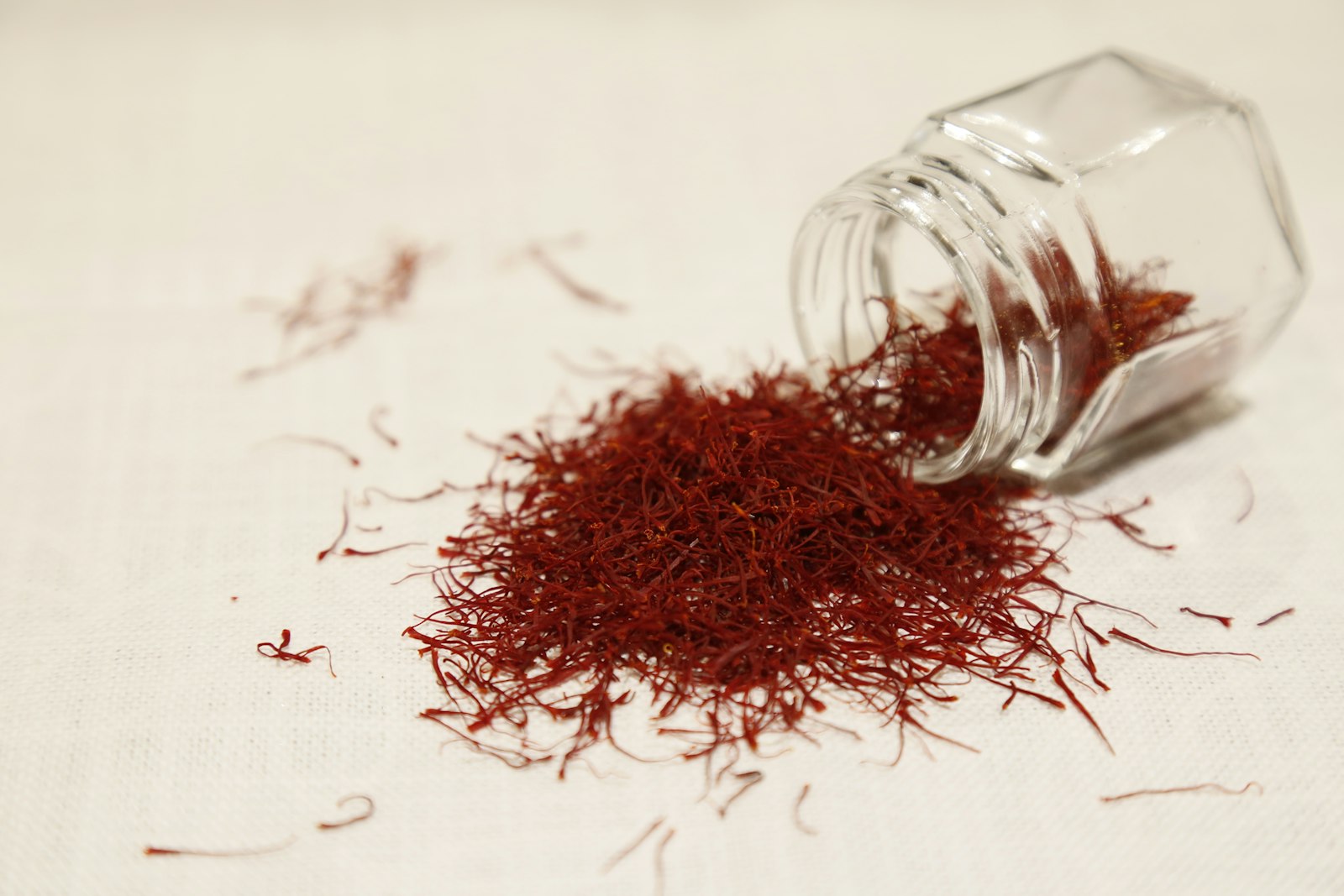
Saffron is the dried stigma of Crocus sativus, a small purple flower cultivated mostly in Iran, Spain, India and parts of Greece. It takes roughly 150 flowers to produce a single gram, which is why the spice runs £4-£8 per gram in good UK supermarkets and why kitchen use is rationed by the pinch.
The supplement form is concentrated differently. The capsules sold under Holland & Barrett’s own label, by Healthspan, Vitabiotics and a growing list of UK brands use a standardised extract – typically Affron, Safr’Inside or Satiereal – that delivers a fixed dose of saffron’s two active compound families: crocins and safranal. The standardisation matters more than the marketing lets on. Most published mood trials use 28-30mg of one of these named extracts, not loose threads from a tin, and the evidence base only really applies to that format. Buy a capsule that just says “saffron 100mg” and you have almost no way of knowing how much active compound you’re actually swallowing.
The trial evidence: what saffron extract has actually been tested for
Saffron’s research record is unusually deep for a wellness supplement. The 2025 Journal of Nutrition trial recruited 202 adults aged 18-70 with low mood and gave them either 28mg of Affron daily or a placebo for 12 weeks. The saffron group showed statistically significant improvements in depressive symptoms, stress and general wellbeing compared with placebo, with separation from the placebo curve visible by week five. It’s the largest piece of saffron mood research yet, and it was led by Adrian Lopresti, the Australian researcher whose name sits on a good chunk of the better saffron trials.
Earlier work built the foundation. A small but much-cited 2004 trial by Akhondzadeh compared 30mg of saffron extract daily against fluoxetine (Prozac, 20mg) in 40 adults with mild to moderate depression over six weeks. Both groups improved on the Hamilton Depression Rating Scale, and the difference between them wasn’t statistically significant – which is the finding the headlines ran with. Worth keeping the size in mind, though. Forty people across two arms is twenty per group, and a trial that small can miss real differences in either direction. It’s suggestive, not settled. A 2025 meta-analysis by Shafiee and colleagues pulled the wider data together and concluded saffron may be a viable option in mild to moderate cases, while flagging that larger, longer, UK-led trials are still missing.
A note on what this evidence does not say. None of these trials position saffron as a treatment for severe depression, suicidal ideation or any clinical condition that warrants a GP appointment. On the strongest reading of the data, it’s a useful adjunct or a reasonable first thing to try for the kind of persistent low mood that sits just short of a clinical diagnosis – which, to be fair, is the bracket most wellness shoppers are actually in.
Saffron for PMS and perimenopausal symptoms
The other reason saffron has worked its way into UK women’s wellness conversations is its evidence for premenstrual symptoms, and here the numbers are genuinely striking. A 2008 trial by Agha-Hosseini, published in BJOG, gave women 30mg of saffron extract daily (15mg twice a day) across two menstrual cycles. By the end, 76% of the saffron group had seen their PMS symptoms at least halve, against 8% on placebo. That’s a wide gap for a supplement trial, and it’s held up reasonably well in smaller follow-up work on perimenopausal mood and hot flushes.
This is consistent territory. If saffron’s mechanism is partly modulation of serotonin and dopamine signalling, as the lab data suggests, it would plausibly help with the mood and emotional symptoms that show up across both PMS and perimenopause. It is not a hormone, doesn’t influence cycle length and isn’t a replacement for HRT where that’s clinically indicated. But as a non-prescription option it has more behind it than most of what gets sold for cycle support. Our piece on myo-inositol for PCOS covers another supplement in this category with a similar level of trial backing, and if the perimenopause angle is what brought you here, the perimenopause skincare guide picks up the skin side of the same hormonal shift.
The sleep evidence almost nobody mentions
Saffron’s mood reputation has rather overshadowed a smaller but interesting strand of research: sleep. A 2022 trial, again led by Lopresti, gave 120 adults with poor sleep either 14mg or 28mg of Affron in the evening, or a placebo, for 28 days. Both saffron doses improved self-reported sleep quality and how people felt in the morning, with no meaningful difference between the two doses. The mechanism is the curious part – the extract raised evening melatonin but didn’t move cortisol, which is the opposite of how most “stress and sleep” supplements are marketed.
It’s a modest finding and the trial isn’t large, so I wouldn’t buy saffron primarily for sleep. But if you’re taking it for mood anyway, a slightly easier night is a reasonable bonus. For anyone whose main problem is sleep rather than mood, the evidence base is thinner here than for the alternatives – our breakdown of the apigenin sleep supplement trend covers one of those, with the same sceptical eye.
Saffron supplements on UK shelves: what to look for in 2026
The supplement market has caught up to the science in a slightly chaotic way. There are now over a dozen saffron capsules on UK shelves, and the gap between the credible and the dressed-up is wider than most labels make obvious.
The table below is the quick version of what’s worth paying for. The named extracts are the ones that actually appear in the trials; everything else is a guess dressed up as a product.
| What’s on the label | What it tells you | Trial-matched dose |
|---|---|---|
| Affron (standardised extract) | The extract used in the biggest mood and sleep trials. Standardised for crocins and safranal. | 28mg/day |
| Safr’Inside (standardised extract) | A whole-stigma extract with its own (smaller) trial support. Used in several UK own-label capsules. | 30mg/day |
| Satiereal (standardised extract) | Mostly trialled for appetite and snacking rather than mood. Fine, but a different evidence base. | ~88-176mg/day |
| “Pure saffron extract”, no name | Tells you nothing about concentration or active levels. Could be anything. | Unknown |
| Saffron in a “mood blend” | Bundled with rhodiola, ashwagandha and B vitamins in an undisclosed ratio. No way to know the saffron dose. | Usually undisclosed |
Three things actually matter when you’re standing in the aisle. First, look for a named, standardised extract – Affron, Safr’Inside or Satiereal on the ingredients list means the product matches something that was actually trialled. Second, check the dose against that name, not the headline number; some cheaper capsules shout “200mg saffron” and contain only a sliver of standardised active. And be wary of proprietary blends – if saffron is buried in a stack of other botanicals at an undisclosed ratio, you can’t tell whether you’re getting a clinically meaningful dose or a rounding error. Holland & Barrett’s own-label Safr’Inside 30mg and Healthspan’s Saffron Mood Support are two of the cleaner UK options at the time of writing.
Is it worth £20-£30 a month?
Here’s the part the marketing skips. A month of a properly dosed, named-extract saffron capsule costs roughly the same as a couple of pub rounds, and the honest answer on value depends entirely on what you’re comparing it to. Against a prescription SSRI for clinical depression, saffron is not the better option and shouldn’t be sold as one. Against the rest of the wellness aisle – the mushroom blends, the “adrenal support” tubs, the £40 greens powders – it’s one of the few things on the shelf with named extracts and real trials behind it, which makes the £25 feel a lot less silly.
The catch is consistency. The 2025 trial only saw separation from placebo at week five, so a fortnight’s supply abandoned because “it didn’t do anything” tells you nothing. If you’re the sort of person who buys a supplement, takes it twice and forgets the bottle at the back of a cupboard, save your money. The cost only makes sense if you’ll actually run it for six weeks.
Side effects, safety and who shouldn’t take it
At supplement doses, saffron is well-tolerated. The most common side effects across trials are mild gastrointestinal upset and the occasional headache. The toxic threshold sits far above anything sold as a supplement – acute toxicity has been recorded above 5g per day, roughly 170 times the standard mood dose – but doses above 100mg/day aren’t recommended outside trial settings, and there’s no benefit to chasing a bigger number.
The genuine cautions are narrower. Saffron should be avoided in pregnancy at supplement doses, on the back of historical evidence of uterine stimulation at high intakes. Anyone already taking an SSRI, MAOI or other antidepressant should speak to a GP before adding it, because the additive effect on serotonin signalling is real and not well-characterised. And if low mood has lasted more than a couple of weeks and is interfering with daily life, the NHS Talking Therapies service is the right first stop, not a supplement bottle.
How to fit saffron into a broader routine
Saffron is best treated as one variable in a wider set, not a single fix. The same body of evidence that supports it for mild low mood is the body of evidence that flags sleep, daylight, movement and protein adequacy as larger levers. Our guide to the 7 best magnesium supplements UK 2026 covers another supplement that pairs sensibly with saffron for sleep and stress, the recent piece on cortisol face picks apart what’s actually known about stress and the body in 2026, and if you’re building a stack rather than buying one thing, the lion’s mane mushroom write-up applies the same evidence test to a nootropic.
A sensible approach for anyone curious: a single, named, standardised extract at the trial dose, taken consistently for at least six weeks before forming a view. The 2025 trial saw separation from placebo at week five – earlier judgements aren’t worth much, and switching brand every fortnight defeats the point entirely.
The honest read on saffron in 2026
Saffron is one of the rare wellness supplements where the evidence has caught up with the marketing, and in a few places overtaken it. It is not a stronger option than a properly prescribed antidepressant for clinical depression, and anyone selling it that way is overreaching. It’s also not a TikTok ingredient with three small studies behind it. For the middle ground – persistent low mood, PMS, the emotional fog of early perimenopause – saffron supplements in the UK have more credible evidence behind them than almost anything else sold in the same aisle.
If you’ve tried saffron, did you actually stick with it for the full six weeks the trials suggest, or did you give up at the two-week mark and move on to the next thing? That’s the question that decides whether it works for most people, and the labels never put it on the bottle.
It’s one of several wellness habits gaining ground this year, alongside fibremaxxing.