

Why UK Gardeners Are Quietly Letting The Lawn Go Wild In 2026
Walk down almost any commuter-belt street in the UK at the end of May and the contrast is hard to miss. Half the front gardens are sheared down to a cricket pitch. The other half are knee-high, daisied, full of clover and yellow rattle, and clearly being left alone on purpose. Five years ago that second group looked like the work of people who’d given up. In 2026 it looks like the work of people who have done the maths.
In This Article
- What’s pushing this beyond No Mow May
- The numbers that tipped the conversation
- Yellow rattle is the part nobody mentions
- Where it works, and where it just looks neglected
- Seed mix, turf, or convert in place
- The honest negatives nobody warns you about
- For the small garden it’s a different game
- How this fits the broader 2026 garden mood
- What to actually do this autumn
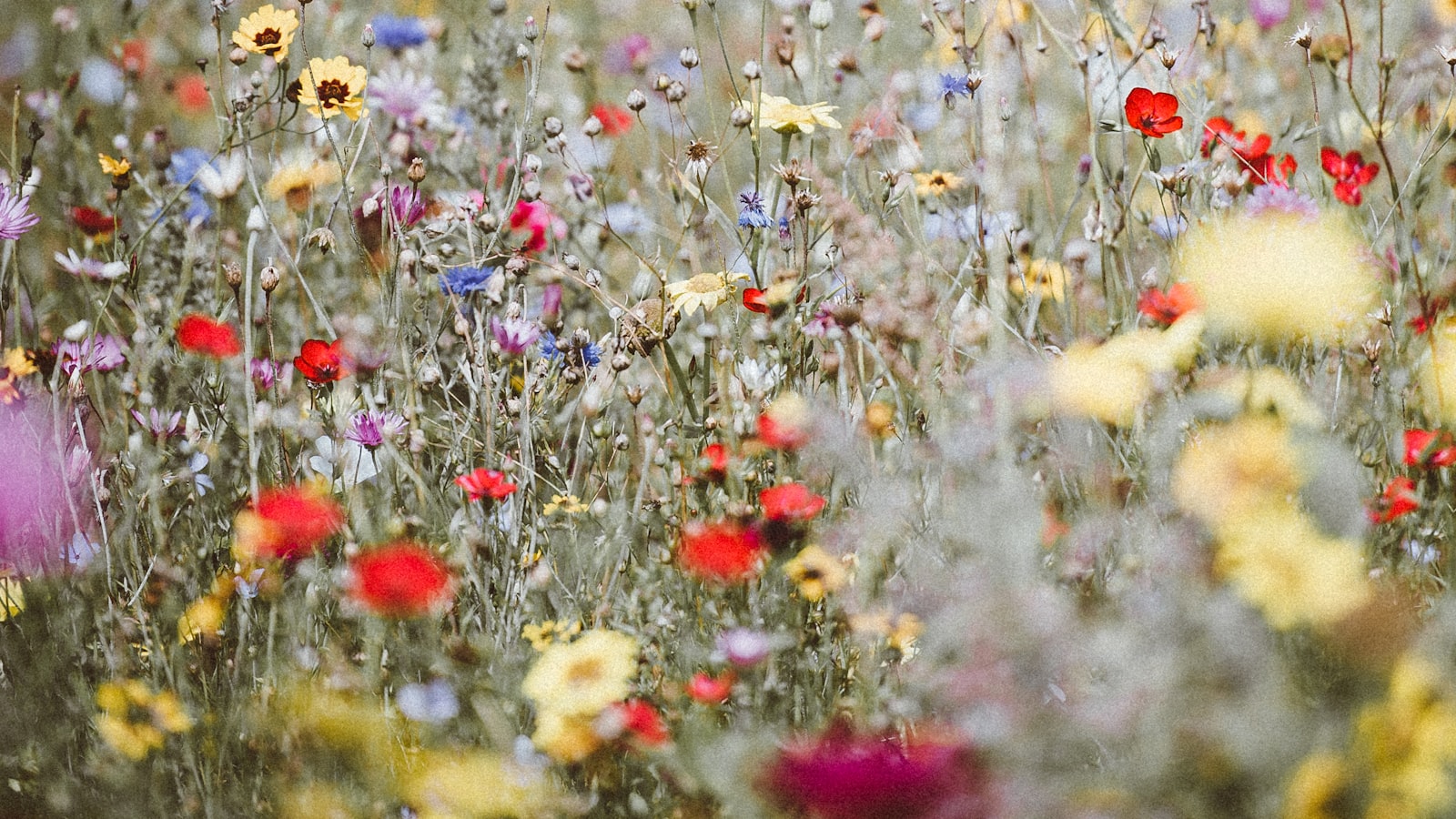
The shift from a tightly clipped lawn to a wildflower lawn in the UK has stopped being a fringe ecological gesture and quietly become a mainstream design choice. The Plantlife campaign that pushed this into the open, No Mow May, is now in its eighth year and is no longer the only thing carrying the trend. What used to be a four-week pause for the bees has turned, for a noticeable chunk of British gardeners, into a permanent rethink of what the lawn is actually for.
This is a piece about why that’s happening, what it actually takes to do well, and where it absolutely should not be attempted. It is not a sales pitch. A wildflower lawn done badly looks worse than a tatty regular one, and a fair number of the gardens I’ve seen this spring fall into that category.
What’s pushing this beyond No Mow May
It would be easy to put the whole thing down to Plantlife’s No Mow May, and the campaign has done a huge amount of the cultural heavy lifting. But the people I know who have actually converted a lawn this year are doing it for three reasons that have nothing much to do with a hashtag.
The first is cost. Water bills are up, petrol mowers need servicing, robot mowers cost what a decent holiday costs, and weed-and-feed has crept up in price for three years running. A lawn that wants to be a lawn is an ongoing expense. A lawn that wants to be a meadow asks for two cuts a year and not much else.
The second is time. The same survey work that has tracked the rise of the garden office over the last few years has flagged a quieter trend: people are using their gardens more, working from them more, and resenting the chores attached to them more. A wildflower lawn is, in a real sense, the lazy option. It just happens to also be the ecologically literate one.
The third is the slow drip of biodiversity coverage in the British press. The collapse of UK bird populations and pollinator numbers has become a story even people who don’t read the gardening pages have absorbed. Once you have read enough of it, the rectangle of mown rye grass outside the kitchen window starts to feel slightly indefensible.
The numbers that tipped the conversation
Plantlife’s own measurements are the figures that have done the most to shift attitudes, and they are worth quoting directly. Their lawn surveys have found that unmown areas produce up to ten times more nectar than weekly-mown ones. A three-year trial on Staffordshire clay recorded twenty-three wildflower species in plots left uncut, against four in plots mown to a normal lawn schedule.
The RHS, which used to be slightly buttoned-up about anything that wasn’t a tidy stripe, has shifted too. Its current wildflower meadow guidance openly recommends leaving the grass uncut from May until August where possible, on the basis that even six extra weeks of growth roughly doubles the value of the lawn to pollinators. That is not the language of a fringe pressure group. That is the gardening establishment changing its mind.
None of this means a regular lawn is suddenly indefensible. There are good reasons to keep one – small children, dogs, a household that lives outside in summer. But the default has tipped. The question is no longer “why would you let the lawn grow”, it is “why are you still cutting all of it?”
Yellow rattle is the part nobody mentions
Here is the piece of practical information that gets lost in the campaign material. If you simply stop mowing a normal British lawn, you do not get a meadow. You get long grass with a few daisies in it. The grass species that make a hard-wearing turf – rye grass, fescues – are aggressive and crowd out almost everything else. Without intervention you will end up with a slightly disappointing tussocky rectangle and probably go back to the mower in frustration by August.
The trick, and it is genuinely a trick, is a small annual plant called yellow rattle (Rhinanthus minor). It is semi-parasitic – it taps into grass roots and steals water and nutrients – and RHS data suggests it reduces grass vigour by something like 60%. That weakening is what creates the gaps wildflowers need to get established. Without yellow rattle the project tends to stall. With it, the lawn slowly opens up and the more interesting plants – knapweed, oxeye daisy, bird’s-foot trefoil, self-heal – can compete.
The catch is that yellow rattle needs a cold winter to germinate. It has to be sown in autumn, September to November, onto soil that has been scarified hard enough to expose roughly half of the surface. Spring-sown seed almost never works. This is the single most common reason that DIY wildflower lawns fail in their first year.
Where it works, and where it just looks neglected
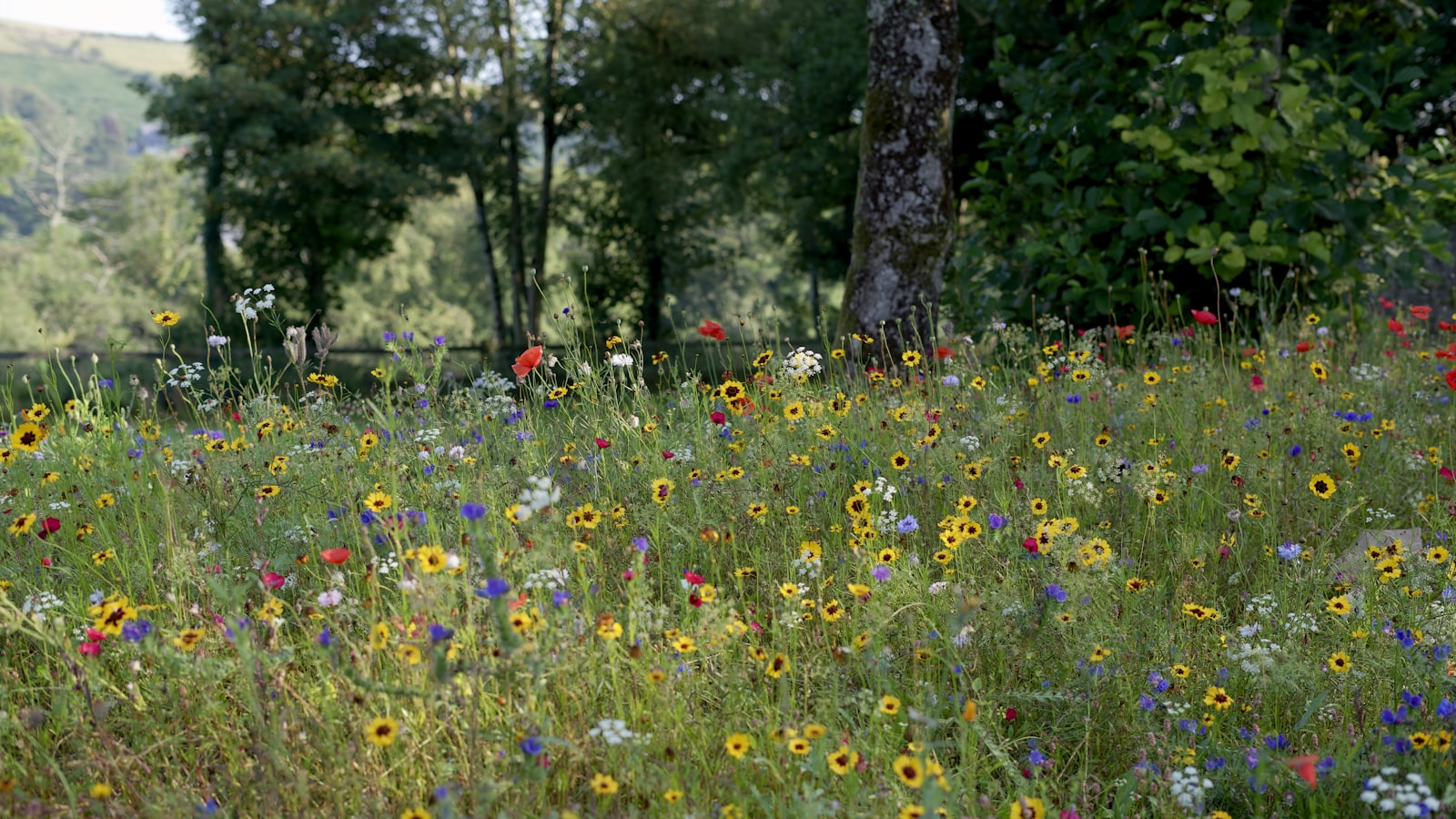
I am going to be unhelpfully blunt about this because the trend has reached the stage where people are doing it in the wrong settings. A wildflower lawn needs a frame. In a country garden, or against a hedgerow, or in a back garden of any size where there’s a path mown through it, it reads as intentional and looks beautiful for months. In a small, formal front garden hemmed in by paving slabs and a wheelie bin, with no mown edge to give it shape, it just looks like the grass has got away from you.
The single most important design move with a wildflower lawn is a sharply mown border. Even fifty centimetres of cleanly cut grass round the edge of a meadow tells the eye that this is on purpose. Without it, neighbours and visitors read it as neglect, which defeats most of the cultural point of doing it.
The other place it tends not to work is shade. Most British wildflower mixes are pitched for full sun and reasonably free-draining soil. Under a sycamore or a north-facing fence the same seed mix will sulk, the grass will still dominate, and you will spend two years convincing yourself it’s about to come good. It usually isn’t. Garden lighting, ground cover planting or a small gravel area is almost always a better answer for a shady corner than a meadow attempt.
Seed mix, turf, or convert in place
There are three routes into a wildflower lawn, and the right one depends on how much patience you have and how much you’re willing to spend.
Convert in place. Cheapest, slowest, the route most home gardeners try first. You stop feeding the lawn entirely, you keep collecting clippings rather than mulching them (every bag removes nitrogen and phosphate, which is what you want), you scarify hard in late summer, and you oversow yellow rattle in autumn. Allow two to three full seasons before it really looks like anything. This works best when the existing lawn is already a bit thin and underfed – aggressively well-kept lawns are harder to convert because the soil is too rich.
Seed from scratch. Strip the existing turf entirely, expose bare soil, and sow a wildflower mix in autumn. Real UK suppliers worth knowing are Meadowmania, Emorsgate Seeds and Pictorial Meadows – they all sell soil-specific mixes, which matters a lot. A “general British wildflower” mix sown into the wrong soil will give you a mediocre result. Expect roughly £20 to £40 per square metre of seed plus the cost of soil preparation. This is the route that gives the most reliable result in 18 months.
Wildflower turf. The fastest, most expensive option. Companies such as Wildflower Turf Ltd and Lindum sell turf rolls grown on a thin felt, ready to lay like normal turf, that flower within weeks of being laid. Prices have settled at roughly £20 to £35 per square metre delivered, against £5 to £9 per square metre for a standard amenity turf. For a small front garden that you want to look established this summer, it is the only route that delivers. For anything over fifty square metres the cost climbs quickly.
None of these are wrong. They are answers to different questions. If you have time and a thin lawn, convert in place. If you have a project window of about a year, sow from scratch in autumn. If you want flowers by July, buy the turf.
The honest negatives nobody warns you about
This is the section the campaign material tends to skip. A wildflower lawn is not friction-free, and people who go in expecting a meadow that runs itself are usually disappointed by year two.
It does need cutting. Not weekly, but at least once in late summer (usually August, when most of the flowers have set seed) and again in autumn. The cut material has to be raked off and removed, not left to mulch, or the soil gets richer and the grass wins again. If you have ever cleared the autumn lawn after a single missed mow, you will know this is a real piece of work for anything over a small front garden. A scythe is genuinely the right tool. A rotary mower on its highest setting can manage it but tends to clog.
It looks rough for about six weeks a year. After the late-summer cut and again in early spring it is a flat, stubby, slightly straw-coloured rectangle. There is no way round this. Anyone who tells you a wildflower lawn looks lovely all year is selling you something.
It also does not really work for children’s football, garden parties or anything else that wants a flat surface you can sit on without sitting in beetles. This is the strongest argument for the mown-paths model: a meandering cut path through a wildflower lawn gives you somewhere to actually walk, frames the meadow, and means you don’t have to choose between biodiversity and being able to use your garden.
And finally, ticks. Long grass and pollinator-friendly planting attracts wildlife, and in parts of the UK that wildlife now includes ticks. It is not a reason not to do it, but it is a reason to have decent socks on hand and to check the dog. Worth mentioning because almost no one does.
For the small garden it’s a different game
Most of the published advice on wildflower lawns assumes you have at least a hundred square metres to play with. Most British back gardens don’t, and a lot of the more interesting recent thinking has been about how to make this work at a much smaller scale.
The answer that is currently winning, particularly in city terraces, is what’s being called a “meadow patch” – a single square or rectangle of wildflower planting, often in a deliberately defined frame of brick edging, stone or hard landscaping, sitting inside a mostly mown or hard-paved garden. Three or four square metres is enough to noticeably bring in pollinators and to read as a feature. It is also small enough to maintain with hand shears and a kitchen rake, which removes the equipment problem.
The other option for very small gardens is to lean into pots and raised beds instead. A trough of wildflowers along a sunny wall, or a single raised bed sown with a pollinator mix, will give you more reliable flowering than trying to convert a five-square-metre lawn surrounded by paving. The flowering window is shorter, but the visual hit is bigger and the maintenance is roughly the same as a normal planter.
Either approach pairs well with the broader shift toward gardens that are designed for spending time in rather than for performing at the neighbours. The meadow patch is the planting answer to the same instinct that has put outdoor sofas, sheltered seating and outdoor cookers into so many British gardens this year.
How this fits the broader 2026 garden mood
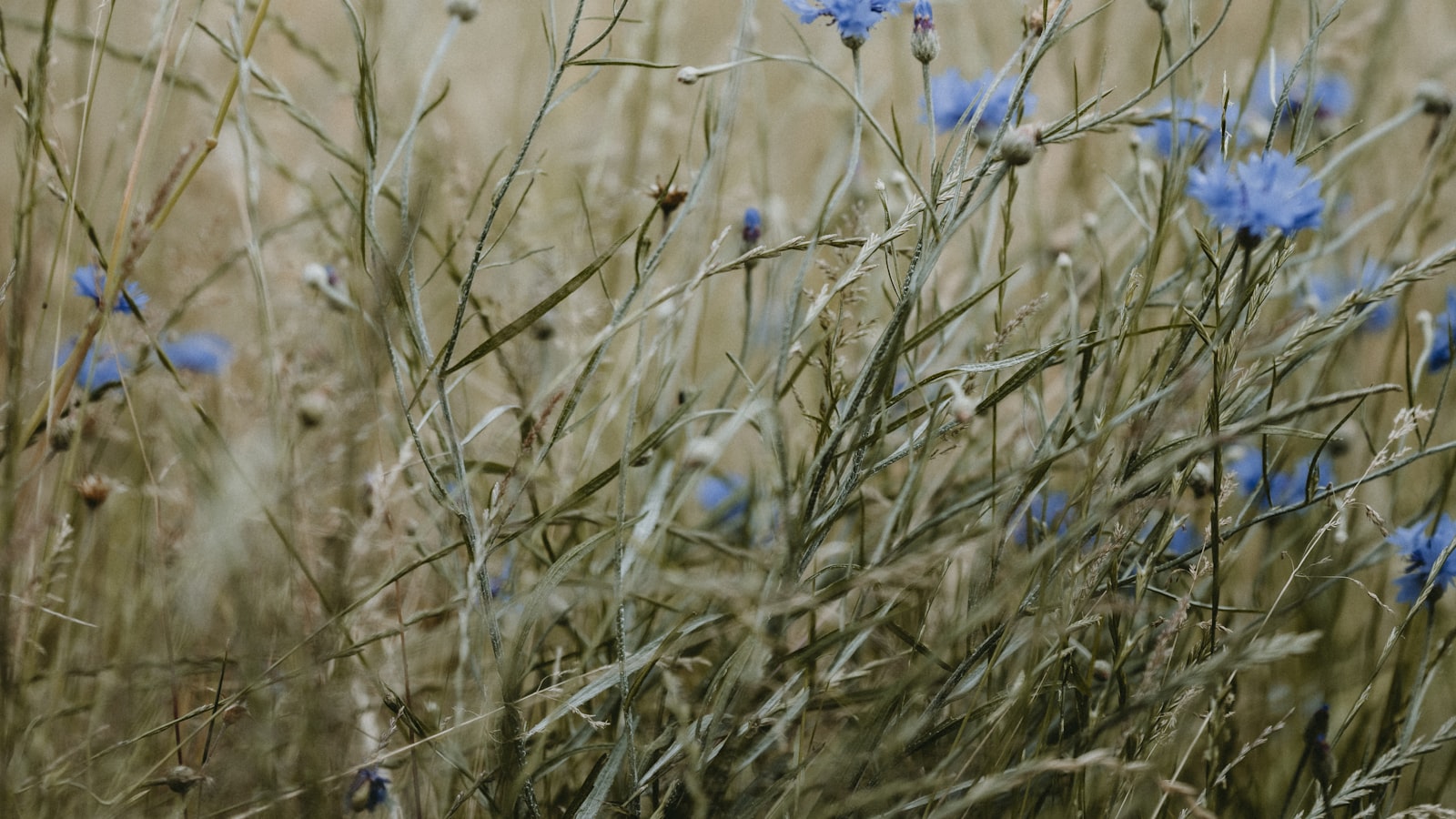
It is worth standing back from the practical detail for a moment. The wildflower lawn is part of a wider re-evaluation of what a British garden is supposed to look like. The same gardeners who are letting the lawn grow are buying fewer bedding plants, replacing fence panels with hedging, leaving stems standing through winter rather than cutting everything back in October, and tolerating moss and dandelions in a way their parents wouldn’t have.
You can read that as fashion, and to some extent it is. But it is also a quiet correction to forty years of garden design that was, in retrospect, slightly hostile to anything that wasn’t a horticultural import. House & Garden, Gardens Illustrated and BBC Gardener’s World have all spent the last two seasons running pieces on the same broad theme: gardens that look like the British countryside, rather than gardens that look like the cover of an American home magazine.
The wildflower lawn is the most visible expression of that, partly because the lawn is the largest single surface in most British gardens, and partly because the change is so binary. You either let it grow or you don’t. There is no halfway look. That makes it both the most striking move in a garden refresh and, for some people, the most uncomfortable one.
What to actually do this autumn
If this has tipped you over and you want to try it on at least part of your lawn, the practical timeline is straightforward. Through the rest of summer 2026, stop feeding the lawn, raise the mower height, and collect all clippings rather than mulching. In late August or September, scarify hard – electric scarifiers can be hired for a weekend – and sow yellow rattle into the scarified patches at roughly one gram per square metre. Press it in. Do not cover it.
By April 2027 you should see yellow rattle germinating. Through that spring and summer leave the area uncut. By the autumn of 2027 the rattle will have weakened the grass enough to oversow a proper wildflower mix into the gaps. By summer 2028 you will have something that genuinely reads as a meadow rather than as a lawn that’s got away from you. It is not a fast project. It is, in the longer view, a much cheaper and more interesting one than trying to keep the rye grass alive through another decade of British summers.
So the practical question for any UK gardener weighing this up isn’t whether the trend is going to last – it almost certainly is, because the cost and biodiversity arguments only sharpen from here – but whether your particular plot has the light, the framing and the patience to make a wildflower lawn look intentional. If it does, this is the autumn to start. If it doesn’t, a meadow patch or a row of pollinator-friendly raised beds will get you most of the way there without the design risk.
Which group are you actually in?
If you do want to keep some areas trimmed without the petrol-mower routine, our guide to the robotic mowers worth buying in the UK in 2026 covers the models that actually handle British grass.
Rewilding one end of the garden pairs nicely with building at the other – here is what a garden room actually costs in 2026.