
Why VO2 Max Has Become The Longevity Number UK Runners Are Quietly Chasing In 2026
Walk into a parkrun briefing in any London park this May and you’ll hear the same conversation looping near the start funnel: not split times, not 5k personal bests, but VO2 max. Garmin watches showing the number on the wrist. Whispered comparisons. The occasional sheepish admission that someone has paid £180 for a treadmill test at a sports lab in Surbiton. The VO2 max UK conversation – once limited to physiologists and the odd Norwegian cross-country skier – has gone properly mainstream in 2026.
In This Article
- What VO2 max actually measures
- The mortality evidence is unusually strong
- Why the obsession is happening now
- How to measure your VO2 max in the UK
- The two training protocols that actually move the number
- What about strength, supplements and the hype products
- Who shouldn’t be chasing it
- What a sensible weekly plan looks like
- The bigger picture
The shift matters because, unlike most fitness fashions, the underlying evidence behind VO2 max as a longevity metric is genuinely solid. This piece looks at why the conversation has got so loud, what the data actually shows, how to measure your own number without overspending, and the two training protocols sports scientists agree on. There’s a fair amount of nonsense being sold around this metric. Most of it can be ignored.
What VO2 max actually measures
VO2 max is the maximum volume of oxygen your body can use during all-out exercise, expressed in millilitres per kilogram of body weight per minute (ml/kg/min). It is a measure of how good your heart, lungs, blood and muscles are at pulling oxygen out of the air and pushing it into working tissue. The higher the number, the more aerobic work you can do before you blow up.
Roughly, the ranges look like this for adults. Untrained 30-year-olds typically sit between 30 and 40 ml/kg/min. Recreational runners often land between 45 and 55. Sub-elite endurance athletes are usually 60 plus. The Norwegian cross-country skier Bjorn Daehlie reportedly tested above 90, which is probably about as high as the human body can go without dropping dead on the lab floor. Numbers decline with age – around 10 per cent per decade on average after 30, faster in sedentary people, slower in those who keep training hard.
What makes VO2 max useful as a longevity marker is that it integrates almost every cardiovascular and metabolic system at once. It is, in a sense, the single number that captures whether the engine still works.
The mortality evidence is unusually strong
The reason VO2 max has gone mainstream is a 2018 study published in JAMA Network Open by Mandsager and colleagues at the Cleveland Clinic. The researchers tracked 122,007 patients who had completed treadmill exercise tests between 1991 and 2014. They sorted them into fitness categories based on age and sex, then followed them for an average of 8.4 years.
The results were striking. Compared with elite-fit patients, those in the lowest fitness band had a 5.04-times higher risk of all-cause mortality. The difference between “below average” and “above average” alone roughly halved mortality risk. Crucially, the study found no upper ceiling for benefit – the fittest patients had the lowest risk, and there was no point at which extra fitness stopped helping. The full study is available on the JAMA Network Open site.
For context, the relative risk reduction associated with moving from “low” to “high” cardiorespiratory fitness was larger than the risk reduction associated with quitting smoking. That comparison is what made it onto American podcasts in 2023, then British ones in 2024, then into the carriages of the Waterloo-bound 7.42 in 2025.
The British Heart Foundation has been making roughly the same point for years – that physical inactivity is a major contributor to premature death in the UK – but framed in terms of “moderate physical activity”. VO2 max gives runners a number, and runners like numbers.
Why the obsession is happening now
A few things converged. Peter Attia’s book Outlive sold well in UK bookshops in 2023 and 2024, devoting a substantial section to cardiorespiratory fitness. Garmin, Polar and Coros watches added VO2 max estimates that, while imperfect, gave people a daily figure to track. Apple Watch surfaced “cardio fitness” estimates in the Health app, putting the number in front of people who had never thought about it. And a wave of UK longevity clinics opened in London, Manchester and Edinburgh offering treadmill-based testing as a standalone service for £150 to £300.
Then there is the menopause overlap. VO2 max declines faster around perimenopause as oestrogen drops, and the longevity-focused women’s health corner of British wellness Twitter latched onto this hard. Articles on hormone-aware training – including our piece on cycle-syncing workouts and the rise of rucking for women – have all reached the same audience: people thinking about cardiovascular function as a long-term project, not a summer-body project.
There is also a competitive thread. Hyrox exploded in the UK over the last 18 months and dragged a chunk of formerly gym-only lifters into endurance training. Once someone has stood on a Hyrox start line and felt their lungs object, they tend to start caring about the number that quantifies the objection.
How to measure your VO2 max in the UK
There are three realistic routes, in order of precision.
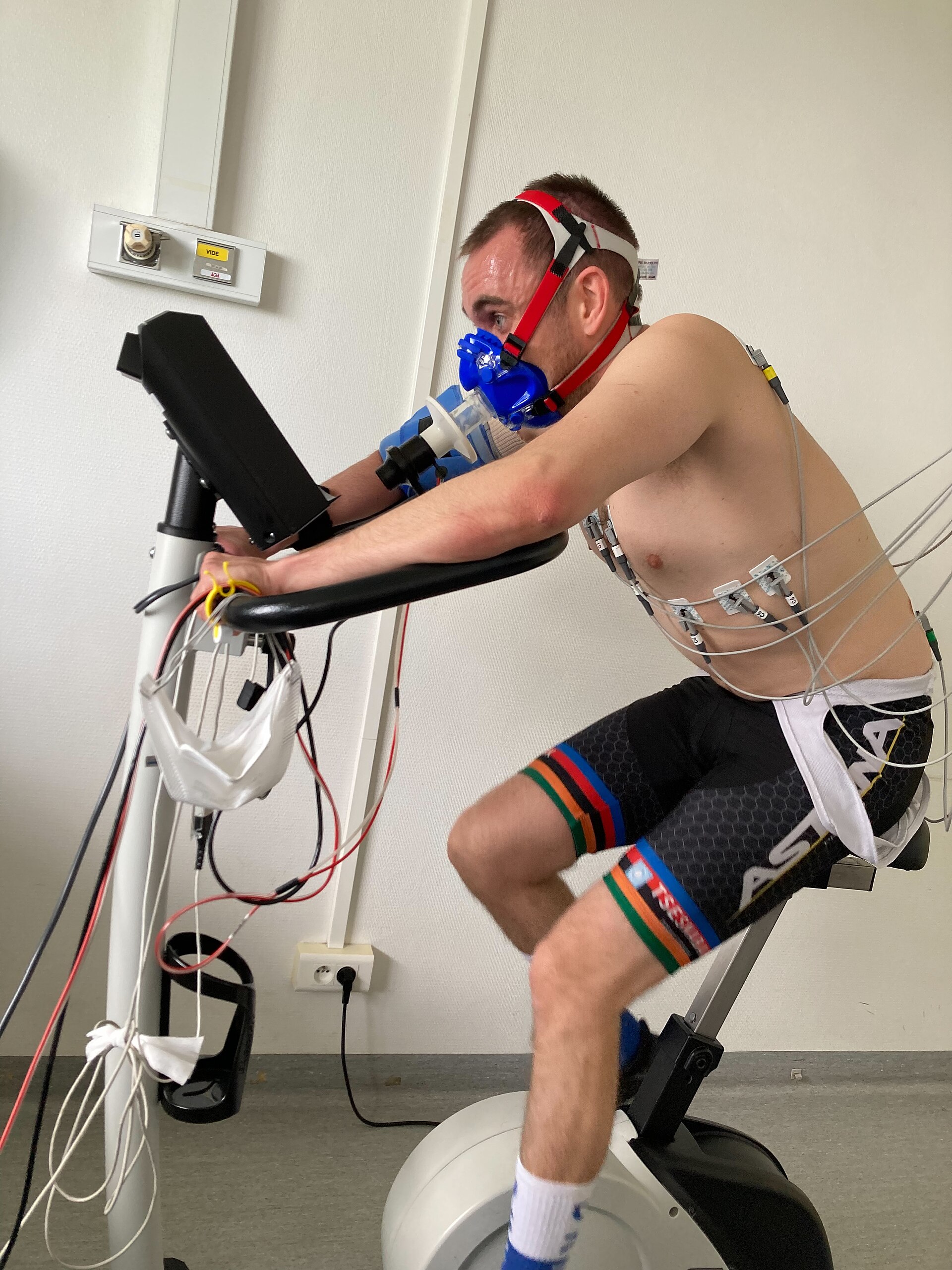
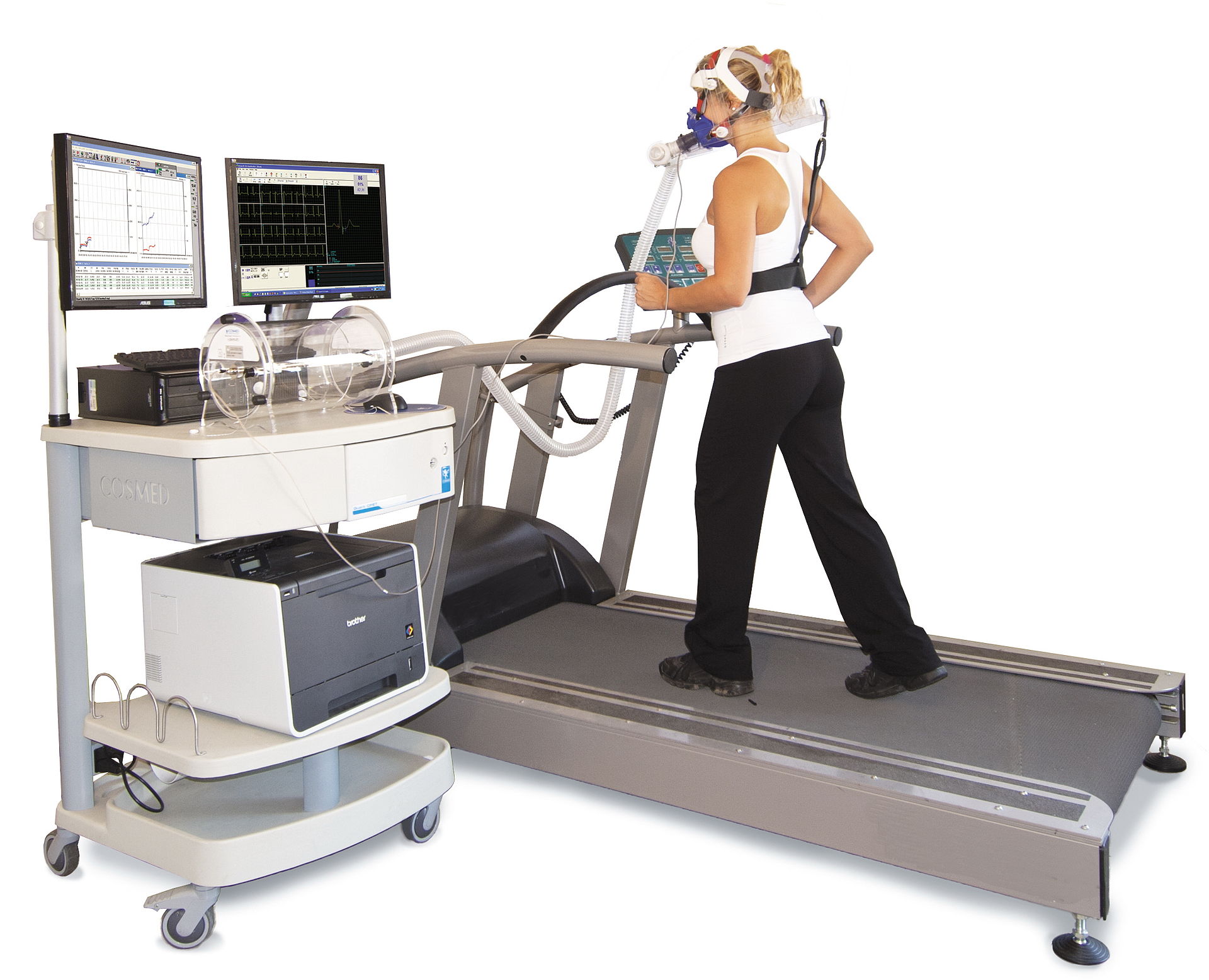
The gold standard is a graded exercise test in a lab, usually on a treadmill or cycle ergometer, wearing a mask that measures inspired and expired gases. UK options include university sport science labs at Loughborough, St Mary’s Twickenham and Bath, independent performance centres in London and Manchester, and increasingly, longevity clinics charging £200 to £400 for the test plus a debrief. The result is accurate to within roughly one or two ml/kg/min – the closest thing to a true number you can get without dying mid-protocol.
The middle route is a sub-maximal field test. The Cooper test (run as far as you can in 12 minutes) and the Bruce protocol estimate VO2 max from standardised treadmill speeds and inclines. They are less accurate than lab tests but cost nothing and have decades of published reference data behind them.
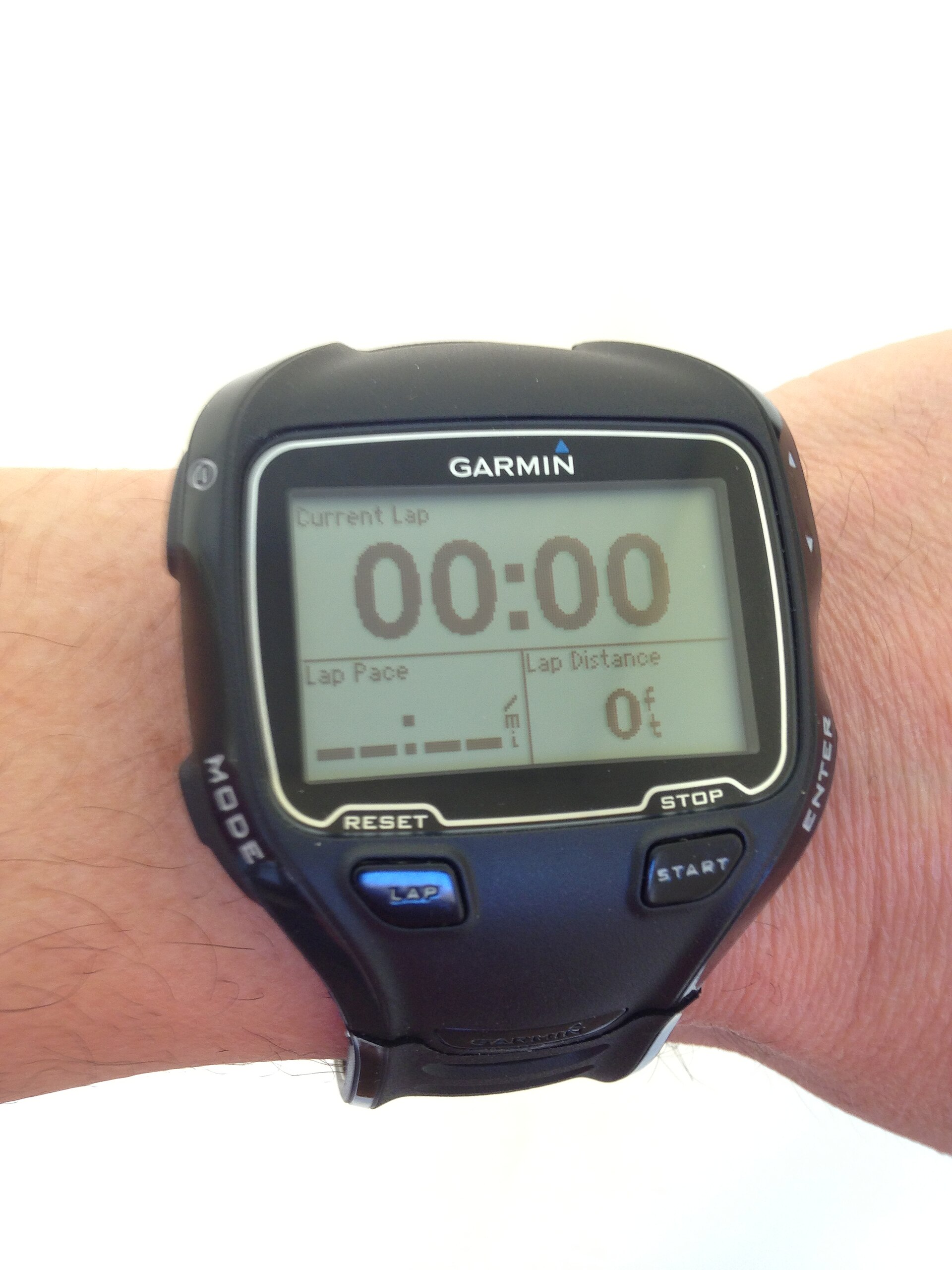
The wrist-watch route – Garmin, Apple, Polar, Coros – uses heart rate response during running combined with pace to estimate VO2 max. The accuracy is real but limited. Garmin’s algorithm, developed with Firstbeat, tends to be within roughly 5 per cent of lab results for trained runners but can be off by more in walkers, cyclists or people who run mostly slowly. The number is most useful as a trend line over months rather than as an absolute value. If your Garmin says 47 and a lab says 51, treat it as a tracking tool, not a verdict.
For most people who already exercise regularly, watching the watch number over six months is enough to know whether training is working. The lab test becomes useful mainly when you want a precise baseline, when you’re training around an injury or age-related decline, or when you’re working toward a specific event.
The two training protocols that actually move the number
Sports science is unusually settled here. Two approaches, used in combination, drive VO2 max higher.
The first is high-volume low-intensity work – what is now usually called Zone 2 training, after the heart rate zone where you can still hold a conversation. This builds the aerobic base. The reason elite endurance athletes spend 70 to 80 per cent of training time in this zone is mitochondrial: low-intensity volume increases the density and function of mitochondria in slow-twitch fibres, expanding the platform on which high-intensity work sits.
Practically, Zone 2 means running, cycling, rowing or fast hiking at an effort where you could just about hold a conversation but would rather not sing. Heart rate, for most adults, sits somewhere between 60 and 70 per cent of maximum. Three to four hours per week of this work, spread across two or three sessions, is the floor. More helps. It is dull. The discomfort is mostly boredom rather than burn, which is why most amateurs skip it.
The second is short, brutal interval work. The protocol with the most evidence behind it is the Norwegian 4×4: four-minute efforts at 85 to 95 per cent of maximum heart rate, with three-minute active recovery jogs between them, repeated four times. Once or twice a week. A 2007 study by Helgerud and colleagues at the Norwegian University of Science and Technology, published in Medicine & Science in Sports & Exercise, compared this protocol with longer steady-state work and found it produced larger improvements in VO2 max over an 8-week training block. And if your training block ends in a race, our guide to running gels for a half marathon covers the fuelling side.
The pattern of roughly 80 per cent slow, 20 per cent fast is sometimes called “polarised” training. It has been the orthodoxy in elite endurance circles for the last decade and is now filtering down to club runners.
The temptation, when starting, is to do everything in the painful middle – somewhere between Zone 2 and a 4×4 effort. This is the zone where most British amateurs train, and it is the zone least likely to move VO2 max. Slow on slow days, hard on hard days. The middle, sometimes called the “grey zone”, is where good runners stall.

What about strength, supplements and the hype products
This is where the conversation goes off the rails. There is no supplement with strong evidence for improving VO2 max in healthy adults. Beetroot juice has modest acute effects on endurance through nitric oxide pathways, but the chronic effect on the underlying number is small. Caffeine improves performance on the day but doesn’t change baseline VO2 max. The various “mitochondrial” supplements being sold under nootropic branding – including some discussed in our piece on the apigenin sleep trend – have no controlled trial evidence for changing VO2 max.
Strength training is more interesting. It doesn’t directly raise VO2 max but it protects the muscle mass that VO2 max depends on – particularly important after 50, when sarcopenia becomes a meaningful drag on aerobic capacity. Two strength sessions per week, focused on compound lifts, is the rough consensus. The creatine conversation – we covered the specific case for women in our recent piece on creatine – sits adjacent to this but isn’t a VO2 max intervention.
Iron status matters more than most realise, particularly for menstruating women. Low ferritin caps aerobic performance hard. A GP iron panel costs nothing on the NHS and is worth checking before throwing months at training that won’t move the needle if oxygen delivery is the bottleneck.
And the obvious one: sleep. Chronic short sleep depresses heart rate variability, raises resting heart rate, and blunts adaptation to training. Five-hour nights stacked across a week of “smart” training is wasted training.
If you’re going to pay for a number, it helps to know what else the private testing market will try to sell you on the same visit. We looked at the £299 full body health scan and what an hour in the scanner actually turns up.
Who shouldn’t be chasing it
The longevity case for VO2 max applies broadly, but the training intensity required to push your number significantly higher isn’t universally appropriate.
Anyone with known cardiovascular disease, uncontrolled blood pressure or a recent cardiac event should not be doing maximal interval work without a cardiologist’s clearance and ideally supervised testing. The Norwegian 4×4 is, by design, very close to all-out. NHS guidance on physical activity emphasises moderate intensity for most adults and conservative progression for older or sedentary populations – this is sensible and the right starting point. The standard recommendation of 150 minutes a week of moderate activity is not optimised for maximum VO2 max gains, but it is optimised for risk-adjusted benefit across the whole population, which is a different question.
People returning from injury, recent illness or long-Covid recovery should build cardiovascular volume slowly. Pushing too hard, too soon, sets back recovery and produces no aerobic gains. Athletes with known overtraining tendencies – distinct from being merely tired – need to be careful about stacking 4×4 sessions on top of high volume.
And, more bluntly, chasing a higher VO2 max in your fifties is a different project from chasing a faster 10k. The first is about preserving years of healthy function. The second is about getting under 50 minutes at Bushy parkrun. The training to do both can overlap, but the framing matters – and slipping into competitive number-chasing can quietly tip into the kind of exercise relationship that stops being healthy.
What a sensible weekly plan looks like
For a recreational runner already doing some training, the structure most coaches would suggest looks something like this. Two or three Zone 2 sessions of 45 to 75 minutes each, where the heart rate stays comfortably in the conversational zone. One interval session, ideally Norwegian 4×4 or similar (six by three minutes hard with two-minute recoveries also works). One genuine recovery day or rest. Two short strength sessions covering squat, hinge, push, pull and a core movement. One long, slow weekend session for aerobic base.
The total weekly load is six to nine hours including strength. That is enough to move VO2 max measurably over three to six months for most amateurs. It also fits, with some negotiation, into a normal working week.
For people starting from sedentary, the picture is gentler. Three 30-minute brisk walks a week, building to walk-run intervals over six to eight weeks, will produce some of the largest VO2 max gains of anyone, because the marginal cost of fitness is lowest at the bottom. The biggest mortality benefits in the JAMA paper came from moving people out of the very lowest fitness band – not from squeezing the last 5 per cent out of high performers. If you have been mostly sedentary for years, the upside is enormous and the entry cost is a decent pair of trainers and a few hours a week.
The bigger picture
It is worth holding the VO2 max conversation lightly. The metric is meaningful and the training works, but the cardiovascular benefits of just moving more, regularly, across decades, are bigger than the difference between a 48 and a 52. The danger of optimisation culture is that people who would otherwise enjoy parkrun and the occasional long walk start to feel they’re failing a longevity assignment.
The basic prescription is, in the end, what it has been for decades: train cardiovascular fitness consistently, lift weights to keep muscle, sleep enough, eat enough protein, don’t smoke. VO2 max is a useful instrument for tracking the first of those, not a separate project. For people who like a number to chase, it is a better number than most. For people who would rather not think about a number at all, the same activities will move it anyway. And if the route off cigarettes runs through a tin of pouches, we looked this week at whether nicotine pouches are safe, and how thin the trial evidence is.
So if you’re sitting on a Garmin readout that says 41 and feeling vaguely guilty, the question worth asking is not “how do I get to 50” – what does the next six months of consistent training look like for you, and what are you willing to give up to make room for it?
Padel moves you in the same stop-start bursts that nudge VO2 max upward, which is part of why it spread so fast. We dug into how padel took over Britain and whether it earns its fitness reputation.
Looking for a free, repeatable way to test that fitness? The best parkruns in the UK double as the country’s biggest weekly time trial.
For the training side of this, see our Zone 2 training guide for UK runners and the 80/20 rule behind it. See also: Zone 2 training guide.