Royal Ascot Outfits UK 2026: A Fashion Editor’s Guide to the Ladies’ Day Dress Code
The Royal Ascot calendar runs from 16 to 19 June this year, and if your invitation has just landed – or if you are squinting at the dress code annotation on yours – the question of what to actually wear has become urgent. Royal Ascot outfits UK shoppers are searching for in 2026 are different to the ones their mothers wore: less prim, more architectural and cut from a noticeably wider cloth. The Royal Enclosure rules still demand a hat and a hemline that reaches at least the knee, but underneath that, the styling has loosened considerably. This guide walks through what each enclosure requires, where the high street is genuinely closing the gap on couture, and the five outfit formulas a fashion editor would build for Ladies’ Day this year – without resorting to “borrowed from a shop window” beige.
In This Article
- Royal Ascot Outfits UK 2026: What the Dress Code Actually Says
- Where the High Street Is Actually Useful This Year
- Hats, Fascinators and What Actually Works
- Five Outfit Formulas to Build Around
- 1. The architectural midi
- 2. The matching trouser suit
- 3. The drop-waist day dress
- 4. The graphic print midi
- 5. The covered halterneck
- What to Skip This Year
- The Footwear Question
- Pulling the Look Together: A Fashion Editor’s Three Rules
Royal Ascot Outfits UK 2026: What the Dress Code Actually Says
The Royal Ascot organisers publish their enclosure rules in detail, and they are – in spite of a thousand “is your dress too short?” tweets every June – tighter than most racegoers expect. In the Royal Enclosure, day dresses or skirts must fall to the knee or below, strapless and off-the-shoulder styles are out, midriffs must be covered, and trouser suits in matching colour and fabric are permitted (a relatively recent change). Hats with a base of four inches or more are mandatory; fascinators were quietly disallowed in the Royal Enclosure back in 2012 and that rule still stands.
The Queen Anne Enclosure – the largest of the four – is meaningfully more relaxed: a fascinator is fine, dress lengths can be a touch shorter, and tailored jumpsuits are allowed. The Village Enclosure is more relaxed again, though the Ascot team is firm that “smart day wear” still means a dress, jumpsuit or trouser suit, not a sundress and trainers. The Windsor Enclosure has no formal code beyond “smart”. If you are looking up Royal Ascot outfits UK retailers stock for 2026, the enclosure printed on your badge is the first thing to check, because it dictates everything that follows.
Where the High Street Is Actually Useful This Year
UK department stores have leant hard into occasionwear for spring 2026. M&S Autograph and the Per Una capsule are stocking modest, well-cut day dresses at under £100; & Other Stories has produced two genuine standouts in heavyweight cotton; Hobbs and LK Bennett keep doing what they do, reliably, in cream and navy. Reiss has a sharper tailored two-piece this season than it has produced in three years. Ghost is still the place for anyone who wants a bias-cut day dress that hangs properly; Whistles continues to nail the architectural midi at around £200.
The trick is to ignore the search results that surface when you type the obvious queries into Google in early June – by then, half the stock has gone in the popular sizes. Buy now, in May, while sizing is still running 8-18 and alterations are bookable. British Vogue’s fashion desk has been flagging this lead time for years and the high street finally seems to be catching up.
Hats, Fascinators and What Actually Works
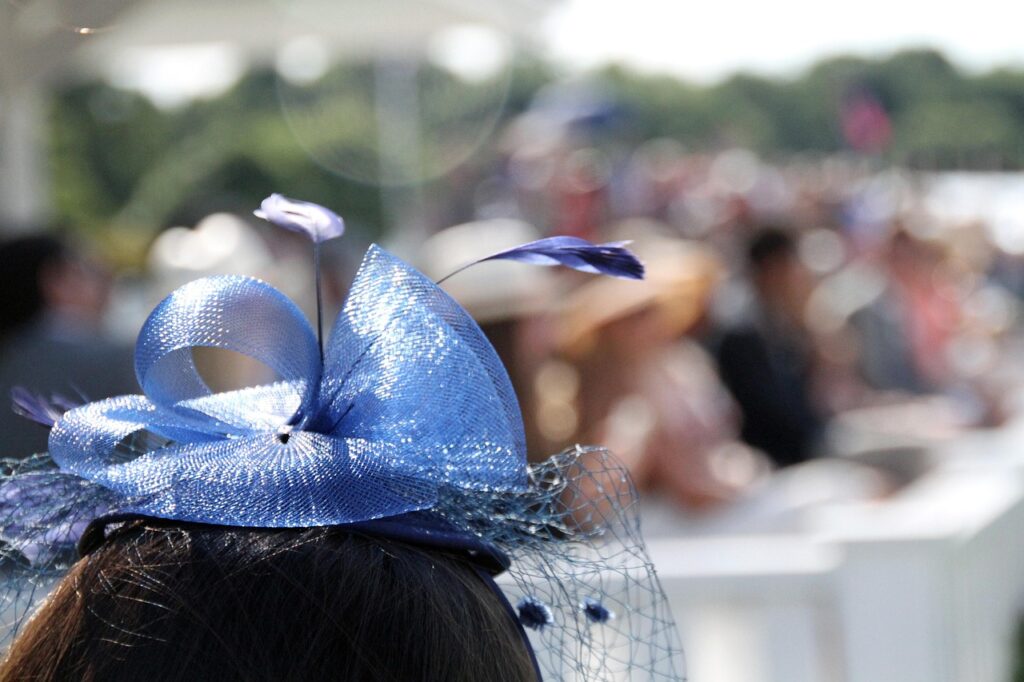
A bad hat ruins a good dress, and most of the cheap millinery online is polyester sinamay that wilts by 2pm. For Royal Enclosure attendees, the four-inch base rule is the pivot: anything smaller is technically a fascinator, and you will be turned away. John Lewis stocks a respectable range of upturned brims under £80; Whiteley Hats and Hicks & Brown are doing sculptural pieces for under £150. If you can stretch to £250 and above, Vivien Sheriff and Awon Golding remain the editorial favourites, and the resale market on Vestiaire is finally starting to thicken with both.
The newer story is colour. The Guardian’s fashion desk flagged a move away from sugared pastels last summer, and the milliners I have spoken to are confirming it: oxblood, terracotta, sage and marine are outselling powder pink and lemon. Match the hat to a piece of trim, the buttons or the shoes – never, please, to the dress itself.
Five Outfit Formulas to Build Around
1. The architectural midi
A column-shaped midi in sage or navy crepe, fastened at the shoulder, worn with a sculpted brim, low-heeled slingbacks and a small clutch. This is the Whistles and Hobbs lane, and it is the single most flattering shape for Royal Enclosure rules. Look for fabric with weight – viscose-lined crepe, not chiffon.
2. The matching trouser suit
Linen-blend, single-breasted, in a muted tone – oatmeal, fawn, sage. Pair with a bias-cut camisole and a wide-brim hat. Reiss, Me+Em and The Fold all do good versions this season. This formula reads modern and avoids the cap-sleeved mother-of-the-bride trap that still snags people in their forties.
3. The drop-waist day dress
Last year’s biggest occasionwear shape is now firmly mainstream. Our guide to drop waist dresses for 2026 covers the cuts that flatter most figures; for Ascot specifically, look for a heavier fabric (cotton-twill, tencel, faille) rather than the floaty chiffon versions that dominate Instagram. The shape photographs better with a structured hat.
4. The graphic print midi
Florals are fine but go bigger and bolder – Erdem’s reach has reshaped the high street here. Me+Em, Hush and Boden have all produced printed midis this season that earn their place. Keep the hat single-tone to stop the silhouette becoming busy, and do not match the bag to the print.
5. The covered halterneck
Shoulders covered with a tailored jacket or fine-knit cardigan for the Royal Enclosure; bare for Queen Anne. Our recent piece on the halterneck for spring 2026 explains why this neckline keeps over-performing – it photographs particularly well in afternoon light, which is most of Ascot.
What to Skip This Year
Pastel dresses with matching pastel hats. Cap-sleeved shifts with bolero jackets (the pre-2010 mother-of-the-bride formula). Corsage broaches. Anything described as “occasion bag” by a high-street brand at under £40 – the textured PU finish always lets it down. Boater hats, unless you are absolutely committed to the look. And, despite a recent revival, kitten heels with thin straps: the Ascot lawn punishes them by mid-afternoon.
The other thing worth ignoring is the wave of “Royal Ascot Style” Instagram curators selling discount codes for fast-fashion dresses in May and June. The dress code aside, those pieces tend to photograph as exactly what they are. If you only have a £150 dress budget, your money buys more on the sale rail at Reiss or Hobbs than on a fast-fashion site at full price.
The Footwear Question
Royal Ascot is a long day on grass, and even the paved areas involve a lot of standing. Block heels, low-heeled court shoes and chunky-soled slingbacks consistently out-perform stilettos. The fashion editors I trust are wearing the new Reiss “Hadley” block heel in cream, and the Russell & Bromley “Penalty” slingback in white or oxblood. The shoes that ruin Ladies’ Day photos are the ones their owners cannot walk in by 4pm.
If you are in the Queen Anne Enclosure, slingback flats are now an entirely respectable choice. Boden, Aeyde and Mango all have decent options under £150, and they pair more comfortably with a midi than the shorter day dresses traditional racegoers default to.
Pulling the Look Together: A Fashion Editor’s Three Rules
First, decide your hat colour before anything else. The dress is replaceable; a great hat is the foundation of the whole look and dictates the palette. Second, limit yourself to two hero colours, plus a quiet third for the bag and shoes. Third, do a full dress rehearsal at home – including the hat in front of a mirror, the bag held under your arm, and the shoes worn for at least 20 minutes on a hard floor. Most outfits that fail at Ascot fail because their owner has not actually walked in them.
For the rest of the British summer social season, our guides to garden party outfits and the summer wedding guest edit cover the next two events on the calendar with the same dress-code-meets-high-street approach.
One accessory note before you decide: pearls are everywhere this season, and a simple strand does more for an Ascot outfit than a second fascinator ever will. Our pearl jewellery guide covers the modern styles that avoid the heirloom look.
Which piece are you building this year’s Royal Ascot outfit around – the hat, the dress or the shoes?